

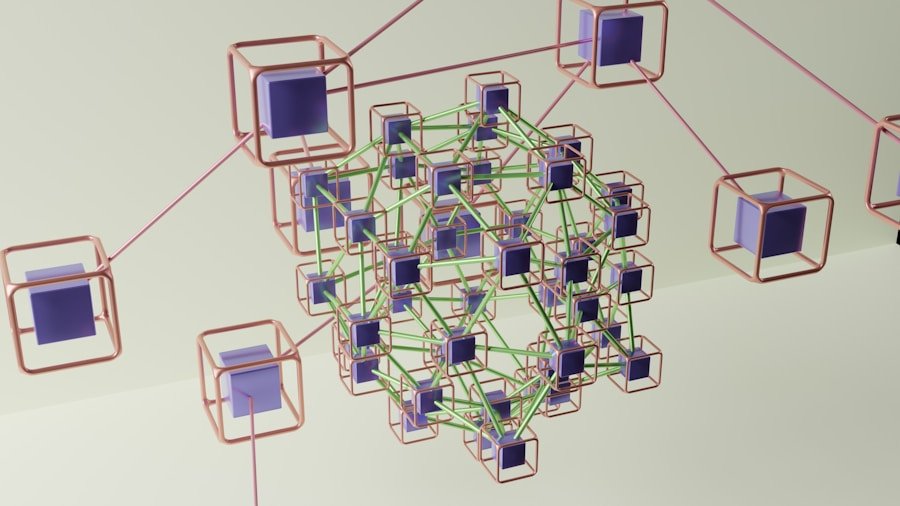

Your exploration of network security in the digital age will invariably lead you to the challenges of identifying vulnerabilities. As networks grow in complexity and scale, traditional security approaches often struggle to keep pace. This article introduces you to a contemporary method for enhancing network security: leveraging Graph Neural Networks (GNNs) to identify vulnerable nodes. Think of a network as a sprawling city, with each building a node and each road a connection. A GNN helps us understand how the layout of this city and the activities within it might expose certain buildings to risk.
The Network Security Landscape
The internet’s interconnected nature, while enabling vast communication and innovation, simultaneously presents a complex attack surface. As you navigate the digital realm, you encounter various threats, from sophisticated nation-state actors to opportunistic individual hackers. Understanding the dynamics of these threats and the vulnerabilities they exploit is paramount.
Evolving Threats and Challenges
Cybersecurity threats are not static; they evolve with technological advancements. We have moved beyond simple malware to advanced persistent threats (APTs), zero-day exploits, and sophisticated social engineering attacks. Your network, regardless of its size, is a potential target.
- Increased Complexity: Modern networks are often hybrid, combining on-premise infrastructure, cloud services, and edge devices. This architectural sprawl creates numerous potential points of failure and makes comprehensive security challenging. Imagine trying to secure a sprawling metropolis with hundreds of distinct districts, each with its own entry and exit points.
- Data Volume: The sheer volume of network traffic and log data generated daily overwhelms human analysts and traditional rule-based systems. Filtering signal from noise becomes a significant hurdle.
- Dynamic Nature: Networks are not static entities. Devices join and leave, configurations change, and user behavior fluctuates. Security solutions must adapt to this constant flux.
- Insider Threats: Vulnerabilities can also arise from within an organization, either through malicious intent or inadvertent actions.
Limitations of Traditional Security Approaches
Historically, network security has relied on signatures, anomaly detection, and rule-based systems. While these methods remain valuable, they possess inherent limitations when confronted with modern threats.
- Signature-Based Detection: This method identifies known threats by matching their unique digital “signatures.” Its primary drawback is its inability to detect novel or evolving threats for which no signature exists. It’s like having a list of known criminals, but no way to identify a new face.
- Anomaly Detection: This approach flags activities that deviate significantly from established baselines. However, it can generate a high number of false positives, especially in dynamic environments, leading to alert fatigue for security teams. Anomaly detection might flag a new, legitimate system update as suspicious, for example.
- Rule-Based Systems: These systems operate on predefined rules set by security professionals. Their effectiveness is limited by the completeness and accuracy of these rules, making them rigid and slow to adapt to new attack vectors.
Graph Representation of Networks
To effectively analyze network vulnerabilities, we first need a robust way to represent the network itself. This is where graph theory provides a powerful framework. Imagine your network not as disparate devices, but as a map where every entity is connected.
Nodes and Edges
In the context of graph theory, a network is represented as a graph comprising nodes (also called vertices) and edges (also called links).
- Nodes: These represent individual entities within your network. Examples include:
- Servers
- Workstations
- Routers
- Switches
- Users
- Applications
- Files
- IP addresses
- Vulnerabilities themselves (as distinct entities linked to affected systems)
- Edges: These represent relationships or interactions between nodes. Examples include:
- Network connections (e.g., TCP/UDP communication)
- Authentication pathways (e.g., “User A logged into Server B”)
- File access permissions (e.g., “User C has read access to File D”)
- Software dependencies (e.g., “Application E uses Library F”)
- Vulnerability exploitation paths (e.g., “Vulnerability G on Server H can lead to compromise of Application I”)
Attributed Graphs
Beyond simple connections, nodes and edges can carry attributes, providing richer context.
- Node Attributes: Information associated with each node. For instance, a server node might have attributes like operating system, patch level, open ports, recent login attempts, or CPU utilization. A user node might have attributes like role, department, or last login time.
- Edge Attributes: Information associated with each connection. For instance, an edge representing a network connection might have attributes like protocol used, port number, bandwidth, or latency. An edge representing an authentication might have attributes like authentication method (e.g., Kerberos, NTLM) or success/failure status.
Advantages of Graph Representation
Representing your network as a graph offers several significant advantages for security analysis.
- Relational Understanding: Graphs inherently capture the relationships and dependencies between network components, which is crucial for understanding how a vulnerability in one system might impact others.
- Contextual Information: By incorporating node and edge attributes, graphs provide a comprehensive context for security events, moving beyond isolated alerts to a holistic view.
- Pathway Analysis: Graphs enable the identification of potential attack paths, allowing you to visualize and prioritize vulnerabilities based on their connectivity to critical assets.
Introduction to Graph Neural Networks
Graph Neural Networks (GNNs) are a class of deep learning models designed to operate directly on graph-structured data. They extend the principles of neural networks to account for the irregular structure of graphs, allowing them to learn from the relationships between data points.
The Power of Message Passing
At the core of most GNNs is the concept of “message passing.” Imagine each node in your network as a small computer. In GNNs, these nodes exchange information (messages) with their direct neighbors.
- Feature Aggregation: Each node gathers information from its neighbors, often by aggregating their features (e.g., using sum, mean, or max pooling operations). This aggregated information provides a local context.
- Feature Transformation: The node then combines this aggregated neighbor information with its own features using a learnable transformation (e.g., a neural network layer). This process updates the node’s representation.
- Iterative Refinement: This message-passing process is typically repeated for several layers. With each layer, the receptive field of each node expands, meaning it incorporates information from increasingly distant neighbors. This allows the GNN to learn complex, multi-hop relationships within the graph.
Types of GNN Architectures
Several GNN architectures have emerged, each with slightly different approaches to message passing and aggregation.
- Graph Convolutional Networks (GCNs): One of the foundational GNN architectures, GCNs smooth node features across the graph, similar to how convolutions operate on image pixels. They are effective for tasks where local structural information is important.
- Graph Attention Networks (GATs): GATs introduce an attention mechanism, allowing nodes to assign different weights to their neighbors based on their importance. This provides more flexibility in aggregating information and can improve performance in diverse graph structures. Think of it as nodes “listening” more carefully to certain neighbors.
- GraphSAGE: This architecture focuses on “sampling” neighbors and aggregating their features, making it scalable for large graphs. It’s often used for inductive tasks, where the model needs to generalize to unseen nodes or graphs.
Identifying Vulnerable Nodes with GNNs
Now, let’s connect the dots between GNNs and network security. By applying GNNs to your graph-represented network, you can identify nodes (systems, applications, or even users) that are particularly susceptible to compromise.
Feature Engineering for Security
The success of a GNN heavily depends on the quality of the features provided to it. For network security, this involves carefully selecting and preparing node and edge attributes that are indicative of vulnerability or risk.
- Node Features:
- Configuration Data: Operating system version, deployed software, patch level, open ports, firewall rules.
- Audit Logs: Failed login attempts, unusual process executions, access to sensitive files.
- Vulnerability Scan Results: CVSS scores, specific CVEs present.
- User Behavior: Login patterns, resource access frequency, administrative privileges.
- System Metrics: CPU usage, memory consumption, network traffic volume.
- Edge Features:
- Traffic Statistics: Protocol used, bandwidth, number of packets, source/destination ports.
- Authentication Details: Success/failure, authentication method, duration.
- Dependency Types: “Depends on,” “communicates with,” “authenticates to.”

You, as the implementer, play a crucial role in deciding which attributes contribute most effectively to the GNN’s learning process.
Supervised Vulnerability Prediction
One common approach is to frame vulnerability identification as a supervised learning problem.
- Labeling Data: You would label nodes in your training graph as “vulnerable” or “not vulnerable.” This labeling could be based on known exploits, historical breaches, or a combination of expert knowledge and security alerts. For instance, if a server was successfully exploited in the past, it could be labeled as vulnerable.
- Training the GNN: The GNN is trained to learn a mapping from the graph structure and node/edge features to these vulnerability labels. Through message passing, the GNN learns how local and global graph patterns correlate with vulnerability.
- Prediction: Once trained, the GNN can predict the vulnerability status of unseen nodes or identify new vulnerabilities in the existing network. It can also assign a probability score, indicating the likelihood of a node being vulnerable.
Unsupervised Vulnerability Prioritization
GNNs can also be used in an unsupervised setting for vulnerability prioritization, especially when labeled data is scarce.
- Anomaly Detection on Graphs: Instead of predicting explicit labels, a GNN can learn a “normal” representation of your network. Nodes that significantly deviate from this learned normal can be flagged as anomalous and potentially vulnerable. This is like learning the typical rhythm of your city and spotting an unusual cluster of activity.
- Graph Embeddings: GNNs can generate low-dimensional vector representations (embeddings) for each node that capture its structural and feature similarity within the graph. Nodes with similar embeddings are likely to have similar roles and behaviors. By identifying outlier embeddings, you can find potentially compromised or misconfigured systems.
- Community Detection: GNNs can help identify communities or clusters of nodes within your network. An unusually structured or connected community, or one exhibiting abnormal communication patterns, could indicate a security risk.
Benefits and Future Directions
The application of GNNs in network security offers several compelling advantages over traditional methods, and this field is continuously evolving.
Advantages of GNNs in Security
- Contextual Understanding: GNNs inherently consider the relationships between network components, providing a richer, more contextual understanding of vulnerabilities than isolated alerts. They see the entire attack chain, not just individual links.
- Automated Feature Learning: Unlike traditional methods that often require extensive manual feature engineering, GNNs can learn relevant features directly from the raw graph data.
- Proactive Identification: By understanding the propagate effects of vulnerabilities through the graph, GNNs can help predict and prioritize potential attack paths before they are exploited.
- Adaptability: GNNs can be trained on dynamic graphs, allowing them to adapt to changes in network topology and behavior, a common characteristic of modern IT environments.
- Reduced Alert Fatigue: By providing more nuanced and contextual insights, GNNs can help security teams focus on genuine threats, reducing the number of false positives.
Challenges and Limitations
Despite their promise, GNNs also present certain challenges in a security context.
- Data Scarcity for Labeling: Obtaining large, accurately labeled datasets of vulnerable nodes is often difficult and time-consuming, especially for rare or novel exploits.
- Interpretability: Like many deep learning models, GNNs can be “black boxes.” Understanding why a GNN classifies a node as vulnerable can be challenging, which is crucial for security analysts needing to take actionable steps.
- Scalability: Processing extremely large and dynamic network graphs can be computationally intensive, requiring significant resources and specialized infrastructure.
- Adversarial Attacks: GNNs themselves can be susceptible to adversarial attacks, where subtle perturbations to the graph structure or features can trick the model into misclassifying nodes. Attackers could manipulate network data to evade detection.
Future Research and Applications
The field of GNNs for network security is rapidly advancing, with several promising avenues for future research.
- Explainable AI (XAI) for GNNs: Developing methods to make GNN predictions more transparent and interpretable will be crucial for their wider adoption in security.
- Dynamic Graph Learning: Building GNNs that can effectively learn from and adapt to rapidly changing network topologies and data streams.
- Reinforcement Learning with GNNs: Exploring the use of reinforcement learning to train GNNs to make optimal security decisions, such as identifying the most effective mitigation strategies.
- Heterogeneous Information Networks: Extending GNNs to handle graphs with multiple types of nodes and edges, allowing for a more comprehensive representation of complex networks.
- Federated Learning for GNNs: Enabling collaborative training of GNNs across multiple organizations while preserving data privacy, valuable for sharing threat intelligence without exposing sensitive network details.

By embracing the power of graph representation and the analytical capabilities of Graph Neural Networks, you can move towards a more proactive, intelligent, and resilient network security posture. The shift from individual component protection to understanding holistic network relationships is not merely an improvement, but a fundamental change in how you can safeguard your digital assets.
FAQs
What is a Graph Neural Network (GNN) and how does it work?
A Graph Neural Network (GNN) is a type of neural network designed to process and analyze graph-structured data. GNNs operate on graph-structured data by aggregating information from neighboring nodes and edges, allowing them to capture complex relationships and dependencies within the graph.
How can Graph Neural Networks be used to identify vulnerable nodes in a network?
Graph Neural Networks can be used to identify vulnerable nodes in a network by analyzing the structural properties of the network graph and identifying nodes that are more susceptible to attacks or failures. GNNs can learn to detect patterns and anomalies in the network topology that may indicate potential vulnerabilities.
What are the advantages of using Graph Neural Networks for network security?
Using Graph Neural Networks for network security offers several advantages, including the ability to capture complex relationships and dependencies within the network, the capability to detect and identify vulnerabilities in real-time, and the potential to adapt to evolving threats and attack patterns.
What are some potential applications of using Graph Neural Networks for network security?
Some potential applications of using Graph Neural Networks for network security include identifying and mitigating vulnerabilities in critical infrastructure networks, detecting and preventing cyber attacks on enterprise networks, and enhancing the security of communication and social networks.
What are some challenges or limitations of using Graph Neural Networks for network security?
Challenges and limitations of using Graph Neural Networks for network security may include the need for large amounts of labeled training data, the potential for adversarial attacks on the network model, and the computational complexity of analyzing large-scale network graphs.